


How to Make a Cortado at Home
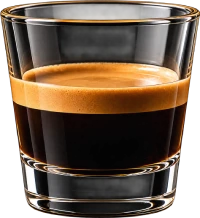
Pour equal weights of espresso and lightly steamed milk, then adjust by a few grams to keep the coffee flavor clear.

Coffee solubility describes how much of a substance in coffee can dissolve in water under particular conditions. During espresso brewing, the result also depends on how easily water reaches that material and how quickly it moves into your drink. This helps explain why a new coffee may need a different recipe—even when your machine and preparation stay the same.
In everyday brewing language, “more soluble” usually means easier to extract. It does not automatically mean better quality or stronger espresso.
The practical lesson: treat a familiar recipe as a starting point for a new bag. Check repeatability, then compare one justified change and taste the result. The new-coffee dialing guide provides the step-by-step workflow.
| What you notice | What to check first |
|---|---|
| A new coffee tastes different at the old settings | Measure the actual dose and drink weight, then taste. Use the previous recipe as a starting point and compare one change if needed. |
| Grinding finer makes the shot struggle | Check dose, basket suitability and even preparation. If the finer setting makes flow erratic or nearly stalls the shot, reassess before going finer. |
| A longer shot tastes less intense | Taste for both balance and body. More output can collect additional dissolved coffee while reducing concentration; keep the change only if the finished drink suits you. |
Roasted coffee is a mixture of substances with different solubilities. During brewing, water dissolves some of them while other material remains in the grounds. There is no single dissolving limit that describes every compound in every bag.
Caffeine and various acids are among the substances water can dissolve. Espresso can also carry tiny oil droplets and fine particles. Material present in the drink is not necessarily dissolved material; those distinctions matter when describing extraction and texture.
Three ideas help separate what is happening:
Something can be water-soluble yet take time to escape from inside a particle. A short espresso brew therefore depends on access and movement, as well as what can dissolve.
Material exposed at broken surfaces can be released relatively quickly. Material deeper inside a particle has a longer route through its internal pores. Those microscopic spaces are different from the larger gaps between grounds that water flows through in the basket.
This is why extractability—how readily a coffee gives up material during a particular brewing process—is often the more useful idea for a home espresso owner.

Roasting changes both the substances in coffee and the bean’s physical structure. Beans expand and their internal pore structure changes. Water is working with a different material after roasting, rather than simply a darker version of the green bean.
More-developed coffees often give up material more readily during espresso brewing than less-developed coffees. This broad tendency helps explain why a recipe that suits a darker roast may leave a lighter coffee tasting unbalanced.
Schenker and colleagues (2000) hot-air roasted coffee to the same degree of roast using two temperature profiles. Microscopy and pore measurements showed that the hotter process produced greater pore volume and larger pores in the cell walls. Two beans of similar roast color can therefore have different internal structures.
Use roast information to form a sensible starting expectation. Then let the actual coffee’s response guide your comparisons. Avoid assigning every light roast a longer ratio or every dark roast a lower temperature without tasting.
A coffee that extracts readily may suit the concentrated, chocolate-led style you enjoy. Another coffee may need a different recipe to express a brighter profile. Neither ease of extraction nor roast darkness establishes quality.
Also separate an extraction problem from a preference mismatch. If you dislike a coffee’s roast character or fruit-forward flavor, repeatedly changing settings may never produce the profile you wanted. Brewing adjustments cannot make all coffees taste alike.
Grinding changes access. Smaller particles provide more exposed area relative to their mass and shorter paths for material to leave their interiors. This can make extraction faster at the particle level.
Espresso also requires water to pass through a compact bed of grounds, called the puck. Finer grinding can increase resistance through that bed. On a conventional single-wall basket, the same drink weight will often arrive more slowly.
Cameron and colleagues (2020) compared espresso measurements with a model that assumed even flow through the bed. In their setup, extraction yield peaked between the coarsest and finest settings tested. The decline at the fine end was consistent with uneven flow. If grinding finer makes a shot less repeatable, compare one coarser setting at the same dose and drink weight.
A slow shot therefore does not prove that the coffee is highly soluble or thoroughly extracted. Shot time describes the outcome of the whole setup; it is not a test of the coffee’s dissolving capacity.
If a small finer adjustment makes flow erratic or nearly stops the shot, reconsider dose, basket suitability and preparation before going finer again. Aiming for usable, repeatable flow is more informative than trying to force the longest possible shot.

Brewing temperature can affect the release and movement of coffee compounds. A higher setting can be a useful comparison for some coffees that remain unpleasantly sharp after preparation and flow are consistent.
That is a possible adjustment, not a rule that hotter always extracts better flavor. Different compounds respond differently, and changes in temperature interact with the rest of brewing. Use only the adjustments your machine supports and follow its warm-up instructions.
Output is the finished espresso weight. Passing more water through the same grounds can carry additional material into the drink. The later liquid is generally less concentrated, so the larger espresso can become less intense even while containing more total dissolved coffee.
This makes a modest output comparison useful when a repeatable recipe needs a different balance. It also creates a tradeoff: a larger drink may improve the flavor you wanted to change while losing body or intensity you liked.
Adding water after brewing only dilutes the collected drink. It does not extract additional material from the grounds. Decide whether you want to change the brewing result or simply its concentration before choosing the comparison.
Use water that meets your machine manufacturer’s requirements. Keep that source and any treatment consistent while comparing coffee recipes. Changing the water, grind and temperature together makes it difficult to identify which change helped.
“Filtered” does not identify one fixed water composition. A change in how a shot tastes is not, by itself, a measurement of solubility.
Imagine your usual coffee gives an enjoyable espresso from an 18 g dose and 36 g output. You switch to a lighter coffee, start from that recipe and find that sharpness dominates.
Those weights are illustrative, not a tested ESPRESSO No.1 recipe or a recommended dose for every basket.

Use the result to choose your next step:
This comparison does not prove that the new coffee has a particular solubility. It tests whether a different output suits it better. If flow is already erratic or nearly stalled, investigate that before extending output.
You do not need to remove every hint of acidity. A balanced fruit-forward coffee can retain brightness; the goal is an enjoyable expression of that coffee, rather than making it imitate your previous bag.
For an automatic or assisted machine, use its documented recipe controls rather than trying to reproduce a manual workflow it does not support. A “strength” setting may change coffee dose; a drink-size setting may change brewing output or add water. Check the manual and compare one supported setting at a time.
A scale and timer describe your recipe and its behavior. Taste helps you judge the drink. None directly measures a coffee’s solubility.
A coffee refractometer can estimate the concentration of dissolved material in a correctly prepared sample. Combined with dose and drink weight, that allows an extraction-yield calculation. It describes what that brew extracted, not the coffee’s maximum soluble content or how evenly extraction happened.
For most home comparisons, a clear record is enough to make progress: coffee, dose, output, grind setting, timing convention and a short taste note. Keep other conditions steady. You can discover a more suitable recipe without claiming to have measured the bean’s solubility.
Roasted grounds contain material that does not dissolve during ordinary brewing, alongside soluble material. Remaining grounds are expected. Trying to make the puck disappear is not a brewing goal.
No. “Soluble coffee” usually refers to instant coffee, made by extracting coffee and drying the resulting extract into a product that dissolves again. Describing roasted beans as more soluble refers to their brewing behavior; the grounds will still remain.
No. Sourness alone cannot separate coffee character, recipe balance, concentration and uneven extraction. Review the recipe and repeatability before deciding that the coffee needs more extraction.
No fixed sequence cleanly separates acids, sweetness and bitterness. Compounds are extracted together, with changing concentrations and rates. Extending a shot does not simply unlock a separate sweetness stage.
No. Keep a recipe that gives enjoyable, repeatable espresso. Solubility helps explain why another coffee may need different conditions; it does not turn the largest extraction number into the best-tasting drink.
Pour equal weights of espresso and lightly steamed milk, then adjust by a few grams to keep the coffee flavor clear.

Use your usual espresso dose, stop at a shorter yield, and taste both shots to find the texture and flavor you prefer.

Mark an espresso with a small spoonful of milk foam. Learn how to get the texture right and adjust the milk to suit the shot.




Leave a comment